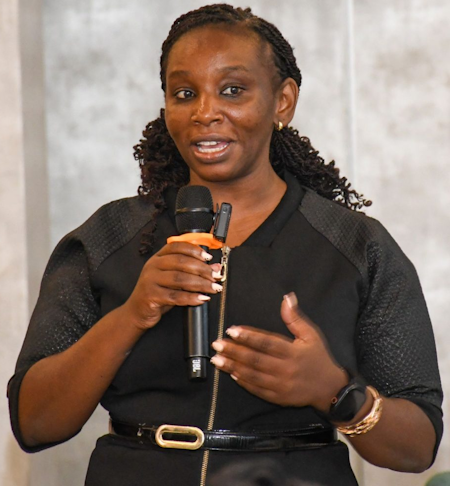
 As the founder of We Believe Community Organisation in Kabete, Zipporah Kamau has built her life around empowering women and girls. Her work spans sexual and reproductive health, leadership training, STEM education for girls, and advocacy against gender-based violence.
But for Zipporah, the fight for safer digital spaces is deeply personal.
In 2022, while vying for a political seat as a Member of County Assembly, she became the target of an orchestrated online smear campaign. Fake, photoshopped images portraying her in compromising situations circulated widely in WhatsApp groups created solely to discredit her.
“The anxiety was overwhelming,” she recalls. “For three weeks, I couldn’t campaign. I didn’t even leave the house. Every day, I woke up afraid of what new rumour would come up.”
The abuse was not just online; she also endured physical violence during the campaign. Yet the response from authorities was disappointing. “When I reported, the police told me to just leave the platforms,” she explains. “They didn’t even try to follow up with the perpetrators.”
Instead of giving up, Zipporah channelled her pain into action. Today, she trains women and girls on online safety, from setting strong passwords to handling cyberbullying.
“I wish someone had prepared us before we entered politics. Now, I make sure other women know what to expect and how to protect themselves. When women hear my story, they realize they are not alone. That empathy makes a difference.”
Beyond the political fallout, the experience took a toll on her mental health. “It felt like a death sentence,” she admits. Therapy, prayer, and spending time in open spaces became her lifeline.
“Therapy saved me,” she says, though she acknowledges that for many survivors, it’s unaffordable. “Sessions cost 3,000 to 5,000 shillings. Most women in rural areas cannot access that. We need to make healing accessible.”
Her organisation now integrates mental wellness into all its programs. Whether in leadership trainings or STEM sessions, women are encouraged to share openly in safe spaces. For Zipporah, healing is not about forgetting but about reclaiming power. In the process, she has also discovered new strengths.
“Healing looks like being able to speak up, to share my story without shame, and to change someone else’s life in the process. Despite the harm, I still believe the internet is powerful. It has connected me to women leaders across the world and opened doors I never imagined.”
Her resilience has carried her far. She has represented Kenya at the Vital Voices Global Partnership in Washington, D.C., and joined the #MeToo Movement’s Pan-African initiative, where she pushed for technology-facilitated violence to be recognised as seriously as physical abuse.
Zipporah acknowledges the contradictions of digital spaces. “Yes, the internet can harm. But it can also build communities, amplify voices, and create opportunities,” she says. She encourages women not to retreat online. “The digital space has given me visibility, connections, and even financial growth. We shouldn’t abandon it—we should claim it.”