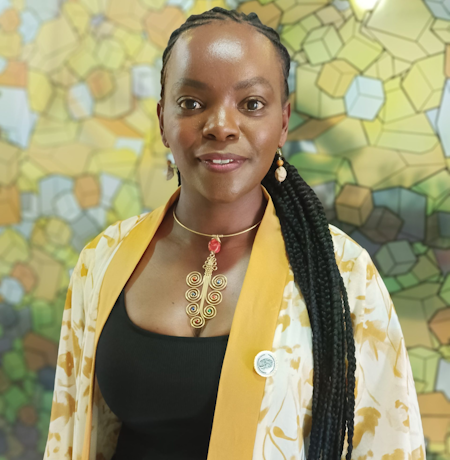
When Beatrice Waithera first logged onto Facebook, she thought it was just another digital “yearbook” to keep in touch with friends. Instead, it became her stage for resistance. As a teenage mother turned community journalist, she began posting about the injustices around her; poverty, police extrajudicial killings, early marriages for young girls, and soon, her words were doing more than documenting life; they were shaping it.
Her social media posts struck nerves and sparked conversations. By 2018, Beatrice was among the voices demanding #JusticeForSharon after the murder of Sharon Otieno was linked to a high-profile politician. “We couldn’t allow Sharon to be forgotten,” Beatrice recalls. “Even if we only had two followers, we had to speak.” That online cry grew into a national debate on femicide, inspiring feminist organizing and even university research.
But visibility came at a price. In 2019, Beatrice co-founded the Red Vest Movement, an anti-corruption campaign that staged simultaneous protests across multiple counties. The movement rattled the establishment, but it also drew trolls, infiltrators, and state surveillance. “One day, I realised one of my online ‘followers’ was actually a soldier tracking me,” she says.
For Beatrice, the attacks weren’t only political, they were deeply personal. Men tried to distract her with fake romantic advances. Trolls body-shamed her, claiming she didn’t look like a “TV girl,” attacks meant to discredit her journalistic credibility. Worse, she received multiple threats of non-consensual sharing of intimate images. Even allies sometimes turned into online aggressors.
“They wanted me to look beautiful in high heels at protests. But how do you face police batons in heels? That was abuse—gendered abuse,” she reflects.
Instead of retreating, Beatrice fought back strategically. She embraced digital literacy and security, training with organizations like KICTANet. She became a digital security defender, teaching women, journalists, and activists how to protect themselves online. At home, she trained her family, starting with her mother, to use encrypted platforms like Signal, understanding that her work could make them targets too.
Her advocacy is inclusive. Inspired by her sister, who has a disability, Beatrice ensures her campaigns are accessible for persons with disabilities. And through her grassroots organization, she equips teenage parents with ICT and e-commerce skills, proving that technology is not just for the elite.
“Technology can open doors for teenage parents, for girls rescued from child marriages, for anyone who dares to dream,” she says.
Beatrice’s journey is a testament to digital resilience. For women like her, surviving online violence isn’t just personal, it’s political. It’s about defending democracy, visibility, and voice.
“Abuse online is meant to silence us. But I refuse to be silent. My voice belongs to every woman who is told she is too loud, too visible, or too strong.”